




By Akindele Orimolade
The renewed controversy over the ownership of Eba Island has ignited heated debate across Nigeria’s coastal states. Yet beneath the swirl of political claims and counterclaims lies a fundamental question that must be answered not with rhetoric, but with verifiable history, law, and documented evidence.
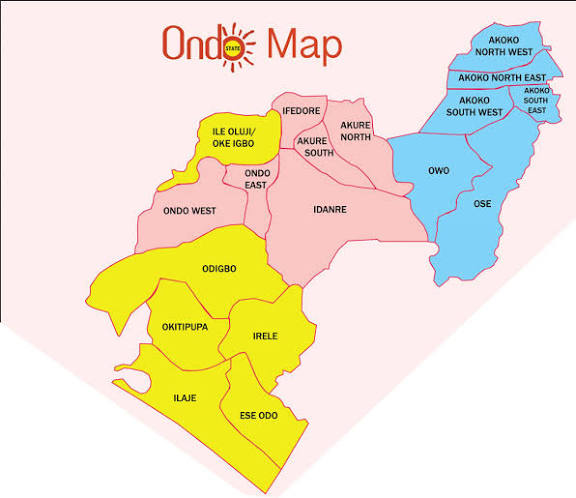
A careful examination of these records , according to Dr. Kayode Ajulo, Senior Advocate of Nigeria (SAN) who is Ondo state Attorney General and Commissioner for Justice, ,points to one unmistakable conclusion: Eba Island historically and legally belongs to Ondo State, specifically the ancient Atijere Kingdom in Ilaje Local Government Area.
For many familiar with the administrative history of Nigeria’s coastal region, the present dispute is both surprising and perplexing. For decades, the island’s status as part of Ondo territory was neither questioned nor contested.
Dr. Ajulo recalls that during the administration of former Ondo State Governor, Dr. Olusegun Rahman Mimiko, when he served as Chairman of the Ondo State Radiovision Corporation (OSRC), officials of the Nigerian National Petroleum Corporation (NNPC), now the Nigerian National Petroleum Company Limited (NNPCL), visited Eba Island on several occasions in the course of official engagements.
According to him, those visits were conducted with the full participation of Ondo State authorities. Government officials hosted the delegations, guided them through the creeks and waterways, and facilitated inspections linked to petroleum exploration activities.
“At the time, there was no controversy,” Ajulo noted. “Administrative records, official maps, and government interactions all clearly indicated that Eba Island was recognized as Ondo State territory.”
The sudden emergence of competing ownership claims, particularly after the discovery of oil deposits in the area, has therefore raised questions about whether economic interests are driving attempts to reinterpret long-established historical facts.
Seeking clarity beyond speculation, Dr. Ajulo said he undertook an independent research trip to the United Kingdom, where many of the colonial-era documents that shaped Nigeria’s territorial boundaries are preserved.
At the British Library, the National Archives in Kew, and other historical repositories, he examined original colonial maps, administrative records, intelligence reports, and boundary documents. These materials, preserved from the era of British colonial administration, offer critical insights into the historical geography of Nigeria’s coastal territories.
The findings, he said, were remarkably consistent.
Colonial administrative maps from the Lagos Colony era—predating the 1914 amalgamation of Nigeria—clearly identify Eba Island and the Atijere corridor as part of the Ilaje/Mahin territory, firmly within the administrative framework of the Lagos Colony at the time.
Further documentation from the post-amalgamation period strengthens this position. Intelligence reports and provincial sketches relating to Ondo Province identify Ilaje District—covering Atijere and Eba Island—as part of the Okitipupa Division.
Historical records also reference the 1885 treaty between the Amapetu of Mahin and British colonial authorities, which placed the Mahin Kingdom—including Atijere and surrounding coastal settlements—under the protection of the Lagos Protectorate.
Equally significant are boundary records and official gazettes from the colonial period identifying River Ufara as the natural dividing line between Ilaje lands and territories traditionally associated with Ijebu communities.
Forestry reserve plans and cadastral surveys from the 1930s further reinforce the historical narrative. These documents designate Eba Island within the Atijere Native Authority Forestry Reserve, while intelligence maps and ethnographic boundary illustrations from Colonial Office archives consistently depict uninterrupted Ilaje administration of the area.
Taken together, these documents form a compelling historical record showing that Eba Island has long been part of Ilaje/Mahin territory administered from Atijere—an area that today lies within Ondo State.
The administrative evolution of the region after Nigeria’s amalgamation also supports this position. With the creation of Ondo Province, the territory fell under the Okitipupa Division. By the early twentieth century, Atijere had emerged as a key administrative centre, hosting a Native Court with jurisdiction over surrounding communities, including Eba Island.
By around 1950, colonial administrative papers show that Eba Island had been incorporated into the Ilaje District Council, with Atijere serving as the district headquarters.
Subsequent local government reforms did not alter this arrangement. When Ilaje/Ese-Odo Local Government Area was created in 1975—and later when Ese-Odo Local Government Area was carved out in 1997—Eba Island remained within Ilaje Local Government Area of Ondo State.
Even today, the island remains listed within Ondo State’s forestry reserve framework.
Beyond archival records and administrative documentation, the island’s human geography also tells a consistent story. For generations, its inhabitants—predominantly Ilaje fishermen, farmers, and traders—have lived and worked within the Ilaje socio-political structure, maintaining cultural and administrative ties with Ondo State.
Their traditional allegiance and governance structures have historically aligned with Ondo authorities rather than neighbouring states.
From a legal standpoint, the issue is equally clear. Under Section 44(3) of the 1999 Constitution of the Federal Republic of Nigeria and Item 39 of the Exclusive Legislative List, mineral resources belong to the Federal Government. However, the Petroleum Industry Act (PIA) 2021 provides that derivation benefits and host community entitlements are determined by the territorial location of the resources and the communities that host them.
Territorial ownership cannot be established through public declarations or media narratives. It rests on historical title, continuous administrative control, recognized boundaries, and legally documented records.
To date, there has been no gazette, judicial ruling, or constitutional boundary adjustment transferring Eba Island from Ondo State to Ogun State.
Geographically, the island sits within the Atijere axis of Ilaje Local Government Area. It is administered by Ondo authorities, inhabited predominantly by Ilaje communities, and separated from Ijebu territories by River Ufara—a boundary long recognized in colonial and administrative records.
Some of the confusion, observers note, may stem from the similarity between the names “Eba” and “Eba Island,” coupled with the heightened attention following recent oil discoveries in the region. But historical facts cannot be rewritten to accommodate economic ambitions.
The stability of Nigeria’s federal structure depends on respect for established boundaries and adherence to lawful processes. Where disputes arise, they must be resolved through constitutional mechanisms such as the courts or the National Boundary Commission—not through competing narratives in the public arena.
For Ondo State and the Ilaje people, the matter is both historical and existential. Eba Island has been part of their territory for generations, and the documentary evidence—from colonial treaties to modern administrative records—supports that reality.
As Nigeria navigates the opportunities and tensions associated with newly discovered natural resources, it is essential that decisions are guided by facts, history, and the rule of law.
On that foundation, the conclusion remains unmistakable: Eba Island has always been—and remains—part of Ondo State.
The resources beneath its soil represent an opportunity for development and prosperity, particularly for the Ilaje communities that have long called the island home. Ensuring that these resources benefit the people of the Sunshine State must remain a priority grounded firmly in history, law, and justice.