





By Akindele Orimolade
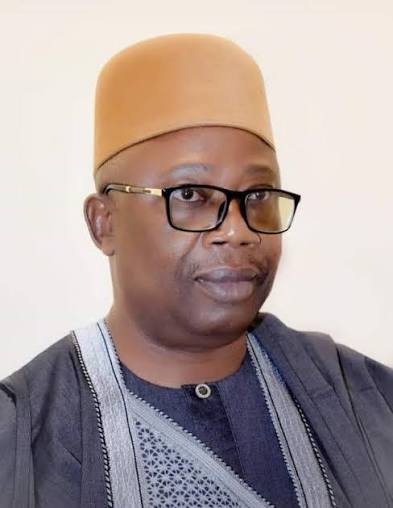
As the next election cycle approaches, political conversations across Ondo North Senatorial District are steadily intensifying. At the center of the debate is a fundamental democratic question: has Senator Olajide Ipinsagba done enough to deserve a second term in the National Assembly?
While incumbency often provides an advantage in Nigerian politics, re-election is not meant to be automatic. It must be earned through performance, accountability, and measurable impact on the lives of constituents. Increasingly, critics argue that by these standards, Senator Ipinsagba’s tenure has fallen short—raising serious doubts about whether he deserves another mandate.
Lingering Concerns Over Performance
Perhaps the most persistent criticism against the senator since assuming office in 2023 is the perceived lack of visible impact across Ondo North.
More than two and a half years into his tenure, many constituents say they are still struggling to identify transformational projects or programmes directly linked to his representation in the Senate.
Civil society voices and community stakeholders have repeatedly asked a simple but troubling question: what tangible gains has Ondo North secured from its presence in the National Assembly?
Some critics have even described the period as a “wasted opportunity,” arguing that the district has yet to feel the full weight of federal representation expected from a senator.
In a functioning democracy, elected officials are judged by results. When voters begin to question whether meaningful progress has been made, it naturally raises the possibility that new leadership may be required.
Youth Empowerment: A Missing Priority?
Ondo North, like many parts of Nigeria, faces high youth unemployment and limited economic opportunities.
For a federal lawmaker representing such a constituency, youth development, skill acquisition, and job facilitation are expected to be central pillars of representation.
Yet critics insist that large-scale empowerment initiatives have been noticeably absent.
Apart from alleged facilitating the appointment of two constituents into federal institutions, many observers say the district has seen few structured programmes for scholarships, vocational training, or job creation.
Given the availability of legislative intervention funds and partnerships that can support such initiatives, many residents believe far more could have been done to empower young people and stimulate economic growth.
Without meaningful investment in human capital development, critics warn that the district risks continued economic stagnation.
Questions Over Constituency Engagement
Effective representation is not confined to speeches in Abuja or legislative proceedings in the Senate chamber. It requires constant engagement with constituents at home.
However, some community members have complained that the senator has not maintained strong grassroots communication channels or responded swiftly to emerging community concerns.
A frequently cited example involves traders near the Olukare Palace, where the senator reportedly promised to build modern lock-up shops and relocate traders to a more conducive environment. Months later, the promise remains unfulfilled, leaving some residents questioning whether it was merely political rhetoric.
Such situations, critics argue, reinforce the perception of distance between the senator and the people he represents.
When constituents feel unheard or disconnected from their representative, public trust inevitably erodes.
High Expectations in a Historically Influential District
Ondo North has historically enjoyed experienced and influential representation in the Senate.
Before Ipinsagba’s election in 2023, the seat was held for over a decade by Senator Robert Ajayi Boroffice, whose tenure set a high benchmark in terms of legislative visibility and constituency development.
With such precedents, voters naturally expect their senator to attract federal projects, facilitate employment opportunities, and champion policies beneficial to the district.
Many constituents now believe Ondo North deserves a representative capable of commanding stronger national influence and delivering more substantial results.
The Unfulfilled University Promise
Shortly after his inauguration, Senator Ipinsagba reportedly promised constituents a federal university for Ondo North.
However, the initiative never progressed beyond the third reading in the Senate. The bill failed to secure concurrence from the House of Representatives and never received presidential assent. The situation was further complicated when the Federal Government placed a seven-year moratorium on the establishment of new federal universities.
What was initially presented as a landmark achievement has therefore become, for many residents, another unfulfilled political promise.
Democracy Demands Accountability
Interestingly, Senator Ipinsagba himself has previously argued that lawmakers seeking re-election should be judged by their performance and their impact on constituents.
Applying that very standard, voters in Ondo North now face the responsibility of critically evaluating his record in office.
Questions have also emerged over perceived inconsistencies in constituency priorities. For instance, critics point out that the senator reportedly donated ₦50 million during Iyin Day in neighbouring Ekiti State, while contributing ₦5 million during Ikare Day, a major celebration within his own senatorial district.
For some residents, such contrasts have only deepened concerns about where the senator’s priorities truly lie.
A Defining Decision Ahead
Ultimately, the decision on Senator Ipinsagba’s political future rests with the people of Ondo North.
But as the 2027 elections draw closer, growing concerns over alleged underperformance, limited youth empowerment programmes, weak grassroots engagement, and unmet expectations are shaping the conversation.
In democratic politics, re-election is a privilege—not an entitlement.
It must be earned through visible achievements, responsive leadership, and consistent service to the electorate.
If voters conclude that these benchmarks have not been met, Ondo North may well decide that it is time for a new voice in the Senate.